Can you swim in the River Thames?
Where swimming is permitted on the Thames, where the Port of London Authority forbids it, what England's first Thames bathing designation changed, and why central London stays closed.
 By James Whitfield, London river and travel writer
Booking Choice
Swimming through central London is not permitted; the compensation is that the closed stretch is the most spectacular twelve miles of water in the country, and a boat leaves for it every half hour.
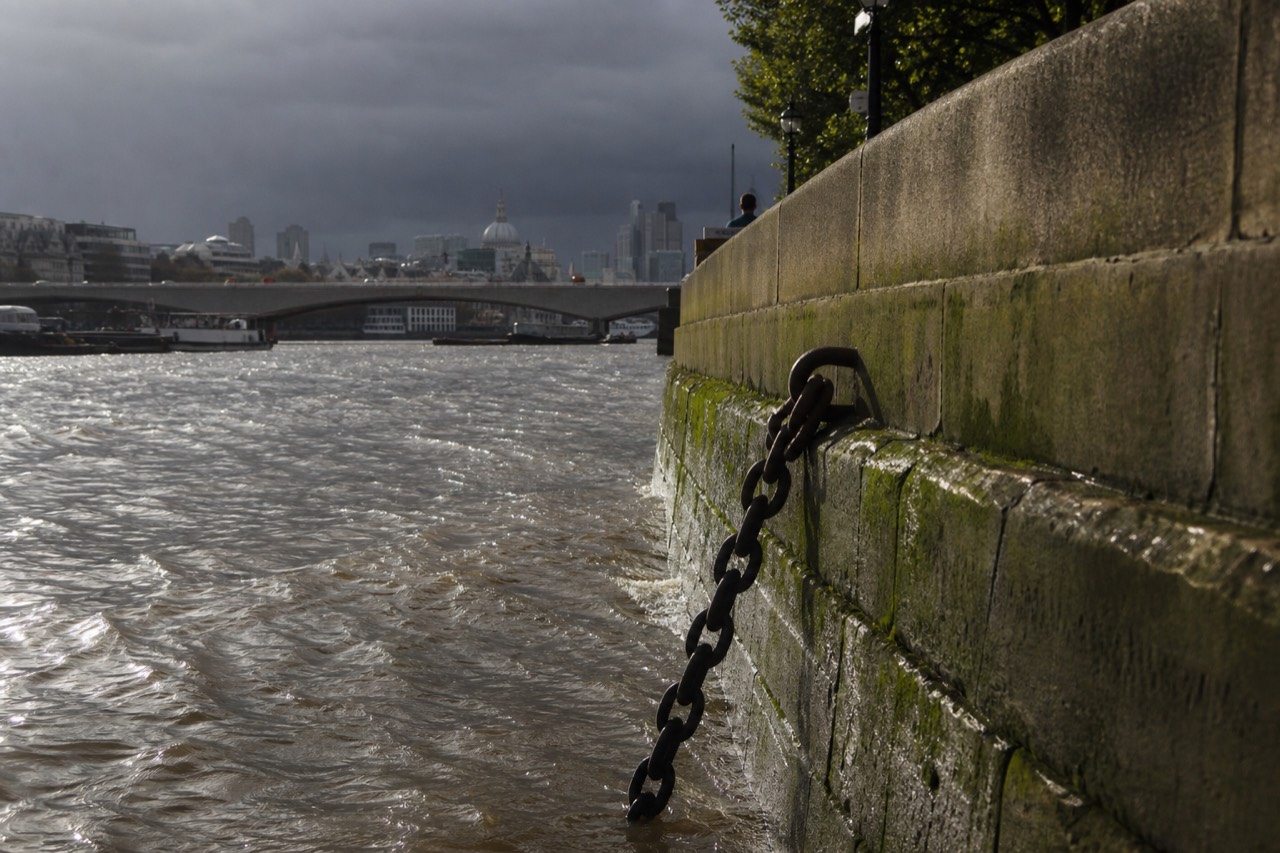
On a hot Saturday at Kingston you will see heads bobbing in the water, towels on the bank, a paddleboard or two. Fifteen miles downstream at Westminster the same river is a working port that receives more than 12,000 commercial vessels a year, the traffic that makes the tidal Thames the busiest inland waterway in the United Kingdom, and the water is closed to swimmers by the authority that runs it. Both of those things are true at once, which is why the question gets such muddled answers online.
I went through the Port of London Authority's own swimming guidance, the Environment Agency's bathing-water designations, and the 2025 and 2026 pollution figures, because the honest answer is a map rather than a yes or a no. Below is where you may swim, where you may not, what the water actually contains now, and what the river does to people who get it wrong.
Can you swim in the River Thames?
In parts of it, yes. The Port of London Authority permits swimming upstream of Putney Bridge as far as Teddington, and on named beaches in Kent and Essex. Across the rest of the 95-mile tidal river, central London included, swimming is not permitted. The PLA states plainly that most of the tidal Thames is not safe to swim, even for strong swimmers.
That last clause is the part people skip. The prohibition through London is not a bureaucratic reflex about water quality, and it did not lift when the sewage figures improved. It exists because a tidal river running at speed through a working port is a hostile place for a body in the water, whatever the bacteria count says that morning.
Upstream the picture changes twice. Between Putney and Teddington the PLA allows swimming while reminding people the reach is still busy with commercial, recreational and leisure traffic. Above Teddington Lock the river stops being tidal altogether and passes out of the PLA's remit into Environment Agency water, which is where the organised open-water swimming clubs, the lidos and the summer river swimmers mostly are.
Out at the seaward end there are two more permitted zones, both effectively beaches rather than river reaches. The PLA names the stretch between Garrison Point and Barton's Point in Kent, where Sheerness beach is often lifeguarded, and the Essex beaches between Bell Wharf at Leigh-on-Sea and East Beach at Shoebury. Both sit beside working shipping channels, and the PLA's advice there is about staying visible and staying clear of vessels.
Where exactly is swimming permitted on the Thames?
Three zones. Upstream of Putney Bridge to Teddington, the Kent beaches between Garrison Point and Barton's Point, and the Essex beaches from Bell Wharf at Leigh-on-Sea to East Beach at Shoebury. Everything between Putney Bridge and the outer estuary, which is the whole of London's river, is outside the permitted areas.
The single most useful thing to understand is that the boundary is a bridge, not a borough. Putney Bridge is the marker, and it is a long way west of anywhere a visitor is likely to be standing. If you are looking at Tower Bridge, the London Eye, the Shard or Canary Wharf, you are downstream of the line by several miles.
| Stretch of the river | Swimming permitted? | What governs it |
|---|---|---|
| Source to Teddington Lock (non-tidal) | Outside the PLA's remit; open-water clubs and designated sites operate here | Environment Agency |
| Teddington to Putney Bridge | Permitted, on a reach still busy with boat traffic | Port of London Authority |
| Putney Bridge to the Thames Barrier (central London) | Not permitted | Port of London Authority |
| Thames Barrier eastward through the estuary | Not permitted except at the named beaches below | Port of London Authority |
| Garrison Point to Barton's Point, Kent | Permitted; Sheerness beach often lifeguarded | Port of London Authority |
| Bell Wharf, Leigh-on-Sea to East Beach, Shoebury, Essex | Permitted, with shipping channels close by | Port of London Authority |
The PLA's own swimming guidance for the tidal Thames sets out those zones and the reasoning behind them, and it is the page to check before any plan, because the permitted areas are not a tradition or a local understanding. They are a live decision by the harbour authority.
What did England's first Thames bathing designation actually change?
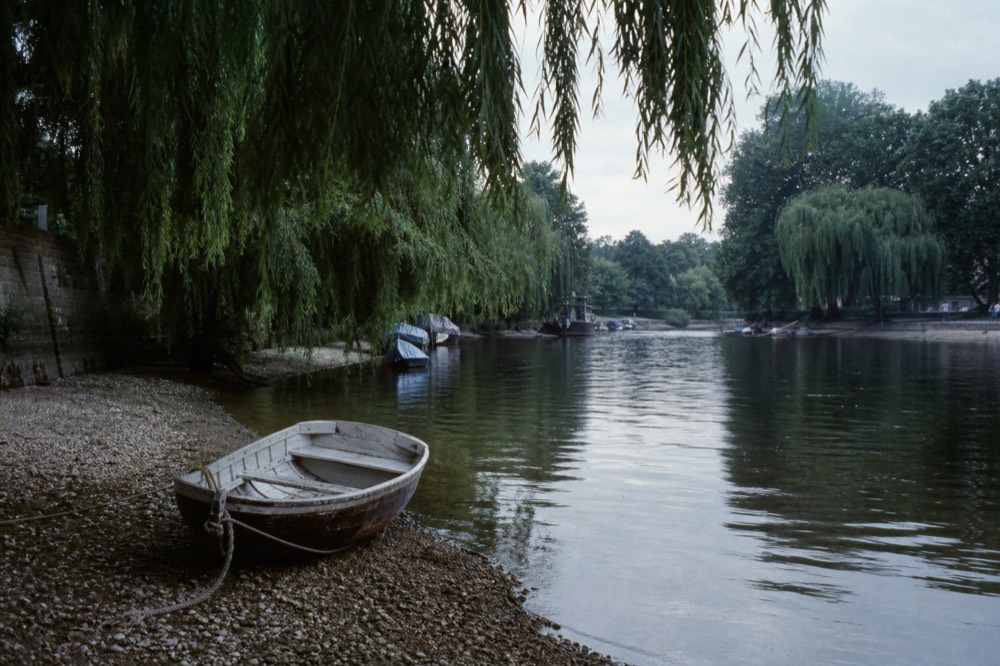
It made one upriver stretch, at Ham and Kingston, a monitored bathing water from the 2026 season, one of thirteen new sites designated nationally in May 2026. Designation means the Environment Agency samples the water through the bathing season and classifies it. It does not mean the water is certified clean, and the first summer's readings showed why.
The distinction matters more than the headlines suggested. A bathing-water designation is a monitoring obligation placed on a stretch of water, not a seal of approval given to it. Once designated, a site gets sampled across the season, the results feed into a four-year classification, and the public gets to see whether the water is Excellent, Good, Sufficient or Poor. Before designation, nobody was obliged to test at all.
The Ham and Kingston site sits well upriver of the point where the PLA closes the water to swimmers, in the reaches around Kingston and Richmond rather than anywhere near the centre. Its first monitored summer produced exactly the kind of mixed picture the designation exists to reveal: potentially toxic blue-green algae blooms recorded during summer 2026, and elevated E. coli readings following a spill, with the site not yet carrying a full classification while sampling continued.
Set that against the national picture and the scale becomes clearer. England had 449 designated bathing waters assessed in the 2025 classifications published that November, of which 417, or 92.9 per cent, met at least the minimum Sufficient standard and 297, or 66.1 per cent, were rated Excellent. Those are mostly coastal beaches with decades of monitoring behind them. A newly designated urban river reach starts from a very different baseline, and the announcement of thirteen new bathing sites across England was the beginning of the work rather than the end of it.
| Year | What changed on the water |
|---|---|
| August 2024 | The Tideway tunnel takes its first connections and begins intercepting storm flows |
| February 2025 | Remaining connections complete; the system moves into full operation |
| 2025 calendar year | Storm-overflow spills fall to 9,186 across 580 overflows, down about 60 per cent year on year |
| November 2025 | England's 2025 bathing-water classifications published: 449 sites assessed |
| January 2026 | ZSL publishes the second State of the Thames report, tracking 21 indicators |
| May 2026 | Ham and Kingston becomes the Thames in London's first designated bathing water |
| June 2026 | Tideway reports more than 20 million tonnes of sewage captured since 2024 |
| Summer 2026 | Blue-green algae and post-spill E. coli readings recorded at the new bathing site |
Is the River Thames clean enough to swim in?
Cleaner than at any point in living memory, and still not clean on demand. The Tideway tunnel has captured more than 20 million tonnes of sewage since August 2024. Storm-overflow spills across the Thames Water network fell from 23,061 in 2024 to 9,186 in 2025. Heavy rain can still push untreated flows into the river.
The tunnel is the reason the numbers moved. Twenty-five kilometres of it run under the river through London, taking the storm flows that used to go straight into the water when Victorian sewers filled. By 31 March 2026 it had intercepted roughly 19.6 million tonnes across more than a thousand separate interceptions, with about 13.3 million tonnes of that in the 2025/26 financial year alone, and the cumulative total passed 20 million tonnes by the following June. Tideway's own annual reporting sets out the figures, and the structure is built to a design life beyond 120 years.
The spill reduction is real but has two causes, and the honest version keeps both. Thames Water's 2025 performance recorded 9,186 spills across 580 storm overflows against 23,061 the previous year, an improvement the company attributes to the new tunnel capacity in central London and to a drier summer. Weather did some of that work. A wet 2026 would not undo the tunnel, but it would move the number.
What has not changed is the mechanism. London still runs a combined sewer, which carries rainwater and waste in the same pipes, and the PLA notes on its own safety page that sewage is sometimes discharged when heavy rainfall overwhelms the system. That is the reason experienced river swimmers upstream watch the rain radar as closely as the tide table, and it is the reason a designation at Ham and Kingston did not immediately produce clean readings. The trend is strongly good. The guarantee does not exist.
Why is the tidal Thames dangerous even when the water is clean?
Because of physics rather than bacteria. Tides run at around five miles an hour, faster than most people can swim. Eddies and undertows form around bridge piers, moorings and an uneven bed. Cold water triggers an involuntary gasp reflex. And the river is a working port that receives more than 12,000 commercial vessels a year.
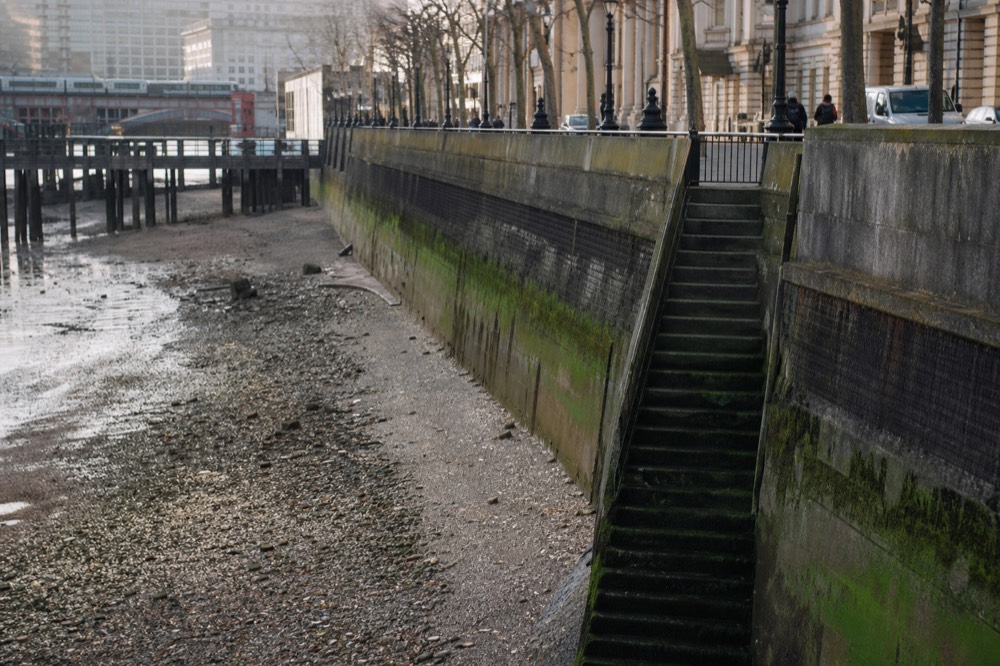
Take those in order, because each one kills independently. A five-mile-an-hour tidal stream is not a current you swim against; it is a conveyor belt, and it decides where you end up. Swimmers who enter the water at a chosen point in central London do not get to choose their exit point, and the walls on both banks run sheer for miles with ladders spaced far apart.
The turbulence is worse than the surface suggests. The bed is uneven, and every bridge pier, pontoon and moored vessel creates eddies and undertows capable of pulling a swimmer under. Debris compounds it: branches and other natural material move fast on a spring ebb and are heavy enough to injure.
Cold is the quiet one. Even in August the river takes heat out of a body quickly, and the initial shock produces involuntary breathing spasms that catch experienced open-water swimmers as reliably as beginners. That gasp reflex, taken with a mouthful of moving water, is how a strong swimmer drowns in the first minute.
| Hazard | What it does | Where it bites hardest |
|---|---|---|
| Tidal stream around five miles an hour | Overpowers even strong swimmers; controls where you exit | The whole tidal river, worst on a spring ebb |
| Eddies and undertows | Drag swimmers under around structures | Bridge piers, pontoons, moored vessels |
| Cold water shock | Involuntary gasp reflex and loss of breathing control | Year round, including summer |
| Fast-moving natural debris | Impact injury and entanglement | After heavy rain and on strong ebbs |
| Commercial and leisure traffic | Vessels cannot see or stop for a swimmer | Central London and the shipping channels |
| Combined sewer discharges | Untreated flows after heavy rainfall | Anywhere below an overflow, after storms |
| Sheer river walls | Nowhere to get out | Central London, both banks |
That is also the backdrop to the river's grimmer statistics, which the separate piece on what the Thames gives back covers in detail. The short version is that the tidal river through London recovers people every year, and the overwhelming majority of them never intended to be in it for long.
What are the rules if you swim in a permitted stretch?
Swim with others, never alone. Never swim across the river. Stay within about ten metres of the bank, in water shallow enough to stand in, and out of the fairway where vessels run. Wear a high-visibility cap and a towable buoyancy aid, plan your exit points, and carry a phone in a waterproof pouch.
Those are the PLA's own safety essentials for the permitted reaches, and they read like a list written by people who have seen what goes wrong. The instruction not to swim across the river is the one recreational swimmers most often break, and it puts a slow-moving target across the path of vessels that need hundreds of metres to react.
Tide planning is the other half. Entry and exit points have to be worked out in advance, and the water level at both of them changes by the hour, so a set of steps that is a comfortable exit at one moment is a wall two hours later. The PLA publishes a free tide prediction tool for the Thames alongside its printed tide tables and its ebb-tide flag warning status, and its guidance is to plan on the assumption that you may need to get out earlier than intended.
Organised swims are a separate matter again. Events on the tidal Thames and its foreshore require the consent of the PLA under the Thames byelaws, which is why the charity swims and mass-participation events you read about are not evidence that anyone may swim there. They are single, permitted, marshalled exceptions with safety boats, a tide window and a closed section of river behind them. The same permit system governs the mudlarks, whose strangest finds from the foreshore come out of exactly this tide window.
What actually lives in the water you would be swimming in?
More than most Londoners assume. Harbour and grey seals, short-snouted seahorses recorded as far upstream as Battersea, European eels, and small shark species including tope, starry smoothhound and spurdog. The estuary seal count stands at 431 harbour seals and 714 greys.
The Zoological Society of London published the second edition of its State of the Thames assessment in January 2026, built on 21 separate indicators. The direction of travel is positive on most of them: long-term increases across a range of wading bird species, short-term increases in marine mammals, and restoration of the intertidal habitat that acts as a nursery for fish. The State of the Thames work is the closest thing the river has to an annual medical.
The sharks are the fact that stops conversations, and they deserve their context. Tope, starry smoothhound and spurdog are estuary species, they are not large, and nobody has been advised to stay out of the water because of them. They are an indicator of a functioning food chain, which is the point.
The report is not uniformly cheerful, and pretending otherwise would be dishonest. The number of fish species recorded in tidal areas has slipped slightly since the early 1990s, and nitrate concentrations from treated sewage effluent are gradually rising while water temperatures climb. A river can be recovering and under pressure at the same time. This one is doing both, which is part of why the Thames carries the reputation it does.
If you cannot swim in it, what is the best way to get onto the Thames?
A boat, and specifically a scheduled one. The hour-long run from Westminster to Greenwich costs from £17.20 and crosses the entire stretch that is closed to swimmers. A one-hour circular from Westminster starts at £14, a 24-hour hop-on hop-off pass at £24.95, and a 70-minute fast RIB to the Thames Barrier at £75.48.
The irony of the closed centre is that it is the most interesting water on the river. Everything between Putney and the Barrier is the part with the Houses of Parliament, the South Bank, St Paul's, the Tower, Tower Bridge and the whole run down to maritime Greenwich, and none of it is legally swimmable. Which is exactly the water the scheduled boats spend all day on.
For a first time on the river, the downstream run does the most work: an hour, one way, from Westminster Pier past the landmarks and out to Greenwich, and it holds 25,220 traveller reviews at 4.5 stars, more than any other sailing on the river by a distance. The Westminster to Greenwich route in detail covers timings, piers and what you pass, and it is worth checking what your date costs before committing to a morning sailing in summer.
If you would rather move fast than look slowly, the small boats go further east than any sightseeing sailing, all the way down to the Thames Barrier and back inside seventy minutes. The RIB and speedboat guide sets out the difference between the 20-minute blast and the full Barrier run, and you can see the live dates for the Barrier trip if the longer one appeals.
Comparing the sailings honestly is the whole purpose of Thames River Cruises, and the ranked list of every boat on the river sits in the best cruise comparison. If your question is simply which trip suits a first visit, the sightseeing cruise guide is the quickest route to an answer, and the wider case for and against is set out in whether a Thames cruise is worth it.
Common questions
Is it illegal to swim in the Thames in London?
Swimming through central London is not permitted by the Port of London Authority, which controls the tidal river from Teddington to the sea. The PLA permits swimming only upstream of Putney Bridge as far as Teddington, and on named beaches in Kent and Essex. Organised events anywhere on the tidal river need PLA consent under the Thames byelaws.Can you swim at the new Thames bathing water at Ham and Kingston?
It is a designated bathing water from the 2026 season, which means the Environment Agency samples and classifies it rather than that the water is guaranteed clean. Its first monitored summer recorded blue-green algae blooms and elevated E. coli after a spill. Check the current sampling results before deciding, and treat rainfall in the previous 48 hours as a reason to stay out.How dirty is the River Thames now?
Much cleaner than a decade ago and still weather-dependent. The Tideway tunnel has captured more than 20 million tonnes of sewage since August 2024, and network-wide storm-overflow spills fell from 23,061 in 2024 to 9,186 in 2025. London still runs a combined sewer, so heavy rainfall can push untreated flows into the river, which is why quality varies day to day rather than sitting at a fixed level.Are there sharks in the River Thames?
Yes, and they are not a swimming hazard. Species recorded in the tidal Thames and its estuary include tope, starry smoothhound and spurdog, all small and none associated with attacks on people. Their presence is treated as evidence of a recovering food chain, alongside seals, European eels and short-snouted seahorses recorded as far upstream as Battersea.What happens if you fall in the Thames in central London?
Call 999 and ask for the Coastguard. Cold water shock takes effect within seconds, the tidal stream runs at around five miles an hour, and the embankment walls give almost nowhere to climb out, so self-rescue is unlikely without help. The river carries lifebuoys along the walls, and lifeboat crews cover the tidal stretch through London specifically because of how quickly this goes wrong.So the honest answer sits in two halves. Upriver, in the permitted reaches and with the tide worked out in advance, swimming in the Thames is a real and increasingly popular thing to do. Through London it is not, and the river is not being precious about it. The compensation is that the closed stretch happens to be the most spectacular twelve miles of water in the country, and there is a boat leaving for it every half hour.
Choose Your Thames Cruise
Start Here: An Option For This Trip
Have a travel date in mind? Choose your date to your hour on the landmark run before arranging the rest of your day.
1 hour one-way from Westminster Pier to Greenwich past St Paul's, the Tower and Tower Bridge, live English commentary, from £17.20, rated 4.5 across 25,220 GetYourGuide reviews, free cancellation on most dates.
Check Dates For Westminster to Greenwich Sightseeing CruiseNo verified cruise on this site matches those choices. Adjust them, or reset for the editorial recommendation.
Compare Options, Match Your Day And Estimate Costs
- Westminster to Greenwich Sightseeing Cruise: 1 hour one-way from Westminster Pier to Greenwich past St Paul's, the Tower and Tower Bridge, live English commentary, from £17.20, rated 4.5 across 25,220 GetYourGuide reviews, free cancellation on most dates.
- Tower Bridge Circular Cruise from Westminster: 1-hour circular from Westminster Pier to St Katharine's and back, turning under Tower Bridge, from £14, rated 4.2 across 523 Viator reviews, free cancellation on most dates.
- River Thames Hop-On Hop-Off Cruise, 24-Hour Pass: 24-hour pass between Westminster, London Eye, Tower and Greenwich piers, hop as often as you like, live commentary, from £24.95, rated 4.4 across 3,283 GetYourGuide reviews, free cancellation on most dates.
- 70-Minute RIB Voyage to the Thames Barrier: 70-minute high-speed RIB from Embankment Pier to the Thames Barrier and back, the full length of the tidal river, from £75.48, rated 4.9 across 803 Viator reviews, free cancellation on most dates.
- London Eye River Cruise: 40-minute circular from London Eye Pier, Big Ben and the South Bank waterfront, live guide, from £15.50, rated 4.8 across 1,912 Viator reviews, free cancellation on most dates.
Compare Your Whole-Party Costs
Enter what you would pay in the same currency for the cruise and for your alternative, including transport and meals for each.